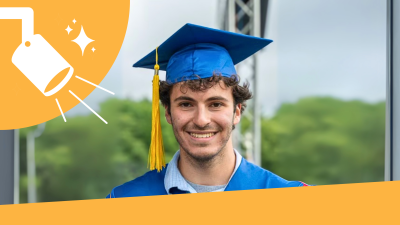
Stephen Klusza

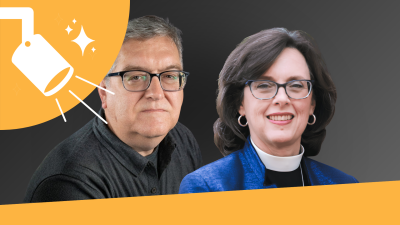
Gill chatted with Stephen Klusza to learn about his professional mission to enhance inclusion in science education, shaped by his personal experience with disability in science.
Introducing Stephen
Stephen Klusza is an Associate Professor of Biology at Clayton State University in Morrow, Georgia. In his work, he is a teacher, mentor, researcher, and advocate for students to spark their natural curiosity across various dimensions of science. PGED is grateful for Stephen’s years-long support as an educator, attending our workshops and using our classroom materials.
Gill: Tell me a bit about what you do.
Stephen: I teach a lot of courses. In addition to genetics, cell biology, and developmental biology, I teach environmental science, neurobiology, and anatomy and physiology for pre-nursing students. I am also heavily invested in facilitating undergraduate student research projects. Right now, I’m also trying to build some fruit fly stocks that will make fly crosses easier. Genetic crosses can be really fun puzzles, but are not always efficient and present barriers to entry for many students. I’m working on rearranging constructs to semi-automate this aspect of fly genetics, which will allow me additional opportunities to introduce fruit fly genetics to more students, mentees, and the public.
Gill: What do you like most about teaching biology alongside other science courses?
Stephen: I feel that it makes me a better professor to teach both inside and outside of the biology major. I try to help students connect the dots between subjects such as genetics, anatomy, and chemistry, because these things don’t exist in a vacuum. They all depend on and draw from each other to enable the possibilities of life as we know it.
Gill: How would you describe the students you serve at your institution, and how does your university’s mission shape the way you support them?
Stephen: We serve the greater Atlanta area, which tends to be on the lower socioeconomic end of the spectrum. Our campus is a mixture of traditional and commuter students and was recently recognized as one of the best colleges for women by Newsweek [1]. We have dorms for students who want to live on campus, but we also have many students who commute. In addition to the traditional college-age students, we have older students who are changing careers, as well as international students. So we actually have quite a diverse student body, but the common denominator for most is significant financial need.
At Clayton State University, over the past few years, we’ve been hard at work building our identity as a university with social mobility as central to its core values. The idea is to provide the best educational experiences that we can, while also providing mentorship and network connections in order to allow our students to ultimately lead the life that they want when they graduate. That mission really is at the heart of how we think about best supporting our students.
Gill: How would you describe your approach to teaching?
Stephen: I try to make sure that my students understand the material as best as they can through Universal Design for Learning and using different teaching modalities. I also recognize that students have been dealing with a lot within the past decade and are experiencing a lot of anxiety and pressure that may tempt them to make short-sighted decisions with their coursework. My approach is to invite a conversation to see what’s going on, because I care that they get the resources they need to improve and not risk jeopardizing their future.
I’m always looking to improve as a teacher, and I try my best to let the students know that I care about them. Even if I have 200 students, and I don’t know all their names, I care about every single one of them. I want them to do well.
Gill: Outside of teaching, what other kinds of work do you do?
Stephen: I am currently the leader of the School of Science’s Coca-Cola Foundation Scholars Cohort. The Coca-Cola Foundation provides scholarships for first-generation students across several colleges at our university. In my role as the cohort leader, I mentor students to work on an environmental science research project. We also participate in community outreach and environmental cleanup events, and I teach them the unwritten curriculum of academic success. I also serve on various committees at Clayton State, including the recent AI pedagogy committee, in which we are trying to establish best practices for AI usage in education for both faculty and students.
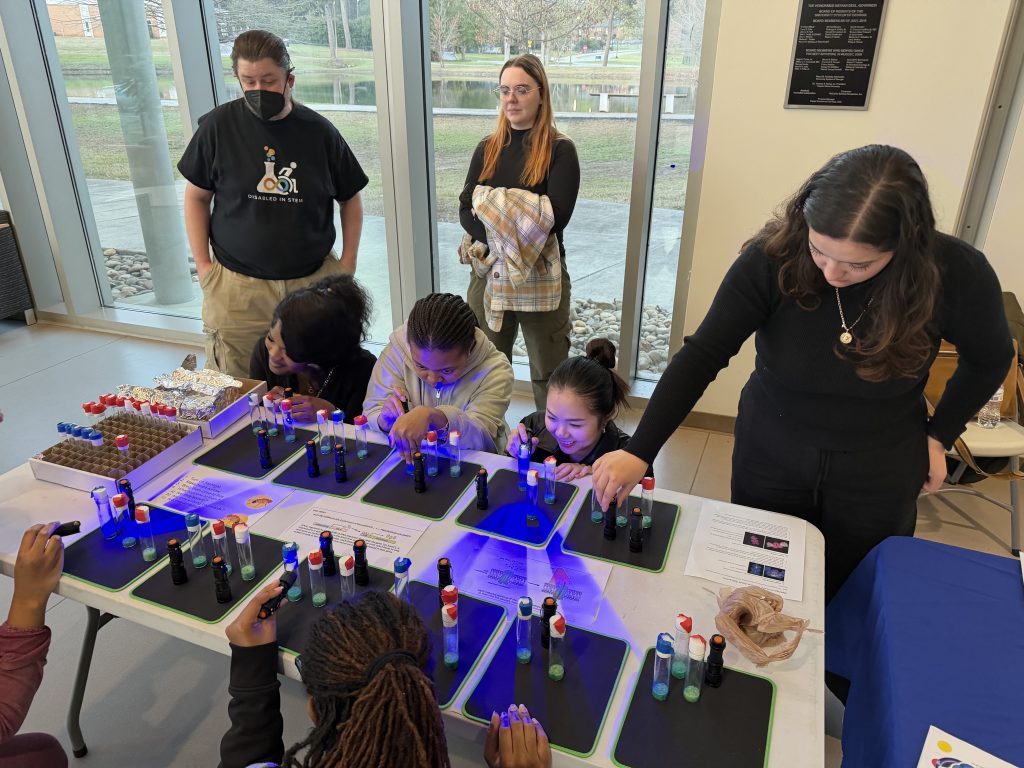
I’ve also been involved with hosting interactive events for all ages at our school as part of the Atlanta Science Festival (ASF) for the past four years. Every year has a different science theme with biology, chemistry, and physics activities. We’ve also added ASF events at the nearby Reynolds’ Nature Preserves that focus on nature walks and journaling. We’ve just finished our second STEM summer camp, in which high-school students were able to study fruit flies with changes in eye and cuticle colors and wing mutations (with the idea of tying it back to human eyes, skin, and disabilities). Last but not least, I’ve written about my experiences with losing my hearing completely during grad school [2][3], with many thanks to Dr. Cooke and Dr. Caicedo of the Mind Hears Blog. It’s a busy time but extremely gratifying!
Gill: Why did you decide to pursue a career in science education?
Stephen: I was an observant kid growing up, always wondering why things existed the way that they did. Learning about Punnett squares during AP Biology in high school was a revelation because, for the first time, I was introduced to genetics and the idea that we could predict the traits an organism will inherit based on different alleles (which blew my mind). I was especially amazed that all of the biodiversity on our planet comes from only four nucleotides in DNA.
When I went to college at Florida State University, I got involved in research around my junior year, working in a fly lab for a couple of years and then doing algal genetics with Chlamydomonas for an honors project. Those experiences made me realize this was something I genuinely wanted to pursue. I took what was supposed to be a one-year gap between undergrad and grad school, which turned into three years working in retail, and it convinced me to go back. I was very happy to join Dr. Wu-Min Deng’s lab at Florida State University for grad school. During that time, I was taking all kinds of courses and researching everything I could, trying to figure out the mysteries of oogenesis and reproduction. I also found myself enjoying taking on and supervising undergraduate student research. All of that, plus my natural curiosity, led me into science education.
Gill: What is the most meaningful project you’ve worked on recently?
Stephen: One of the most meaningful projects I’ve worked on recently is in DEI advocacy, specifically disability advocacy, though it’s not limited to just that. COVID had just hit when I first started my assistant professorship; like many others, I was at home and away from the lab, and everything moved online. That’s when I went all-in on disability advocacy work. I was inspired in part by a now-grad student, Alyssa Paparella, who encouraged me to be on a panel with her at an online conference. From there, we kept collaborating, giving more online talks about what it means to be disabled in science, trying to promote awareness that disabled people are a marginalized group with unique experiences.
There are so many different kinds of disabilities, and even people with the same disability may need very different accommodations. It’s hard for students to get what they need, and even when they do, they can end up being targeted by professionals or administrators [4][5].
Gill: What keeps you motivated to do this work?
Stephen: For me, this work is meaningful because of my own position. I recognize the privileges that come with being a white man, and there are things I simply don’t have to worry about that Black women do, for example. Intersectionality is real, and in my case, disability is the only marginalized identity that I carry. Even with the privileges that are afforded to white men, I have always felt like I had to work four or five times as hard as a non-disabled man, and I’ve seen similar patterns with my wife, who has had to work much harder than her male colleagues in her field just to be acknowledged.
I’m not free from consequences when I speak out, but I also know I’m less likely to face the level of backlash that someone with multiple marginalized identities might get. I try to use that relative safety to speak up where I can. These are tough conversations, and challenging those with power can easily lead to punitive consequences for your career and even your freedom. But I was brought up to believe in justice, and it’s hard to live in a world where so many injustices happen with no consequences. We just have to keep fighting.
Gill: What would you say is the biggest challenge in the field right now?
Stephen: These days, the biggest challenge for me is how quickly academia rushed back to “normal” after COVID, especially around conferences. During the pandemic, everything moved online, and tons of people could attend. As a disabled person, that shift was huge for me because closed captioning, transcripts, and online formats made it so much easier to follow talks. This type of universal access was also a lifeline for others, including other disabled scientists, mothers with young infants, and international professors and students who couldn’t afford the cost of attending from overseas. Many disabled people can’t travel for health/financial reasons or even have a job. Disability payments often keep people below the poverty line, and if they earn “too much,” they lose support, as I’ve outlined in a thought piece for the American Society for Cell Biology (ASCB) [6]. We proved that online or hybrid conferences not only increased overall attendance, but they also provided much-needed equity; nevertheless, most organizations went right back to in‑person only. I understand that there were significant financial and logistical challenges with hosting hybrid events, but it feels like those accommodations were a temporary box‑checking exercise instead of a real effort to include people. Now, I mostly participate in online or hybrid events.
When we arbitrarily deny people access to spaces and opportunities, we’re making a statement about whose presence we value and whose potential we’re willing to ignore. I think that’s both unjust on a human level and shortsighted on a scientific level, because we will never learn what those people would have contributed to the field if we’d given them what they needed to thrive.
Gill: What do you see as your biggest opportunity right now?
Stephen: I’ve been invited to be a plenary speaker at the 68th Annual Drosophila Research Conference in Philadelphia in 2027, specifically to talk about DEI and my lived experience with disability. I’ll have the chance to share how my disability shapes the way I live, teach, and do science. That invitation is going to break my usual “online/hybrid only” principle because it’s a rare opportunity to reach an audience I don’t often get access to, and I hope to plant a lot of seeds.
At the same time, my health and my wife’s health shape how I think about these opportunities. It seems I may have a rare condition tied to my hearing loss, and respiratory illnesses make it worse. My wife is susceptible to lung damage from respiratory pathogens, so I still wear a mask when I’m working and will wear one at that conference. It can feel isolating because almost no one masks anymore, and most people have the viewpoint that they are unneeded now. I’ve always appreciated the norm in Japan of wearing a mask when feeling sick for the consideration of others, which is sorely lacking in the US. Ultimately, when I’m deciding whether to travel or to be in crowded spaces, I’m always weighing not just my own risk, but the possibility of bringing something home that could seriously harm my wife. Balancing that reality with the desire to show up, speak out, and use opportunities like that plenary talk to push for more just and inclusive practices is very much at the center of my life and career.
Gill: What is one thing you would like to check off your bucket list?
Stephen: One thing I’d really like to check off my bucket list is visiting Japan. I’ve always liked Japanese culture, and though I am a longtime fan of anime, there is also incredible architecture, music, and beautiful islands to experience and visit. I’m also really drawn to the language, and I want to learn how to write in hiragana and kanji one day.
Gill: Is there anything else that you would like to share with our audience?
Stephen: A meaningful quote ~
“I am, somehow, less interested in the weight and convolutions of Einstein’s brain than in the near certainty that people of equal talent have lived and died in cotton fields and sweatshops.”
– Stephen Jay Gould
References:
[1] https://rankings.newsweek.com/americas-best-colleges-for-women-2026
[2] https://themindhears.org/2021/08/11/the-sounds-of-silence/
[3] https://themindhears.org/2021/08/25/and-i-knew-the-silence-of-the-world/
[5] https://dralegal.org/press/harvard-mental-health/
[6] https://www.ascb.org/diversity-equity-and-inclusion/a-primer-for-detection-of-ableism/