Monica Colaiacovo
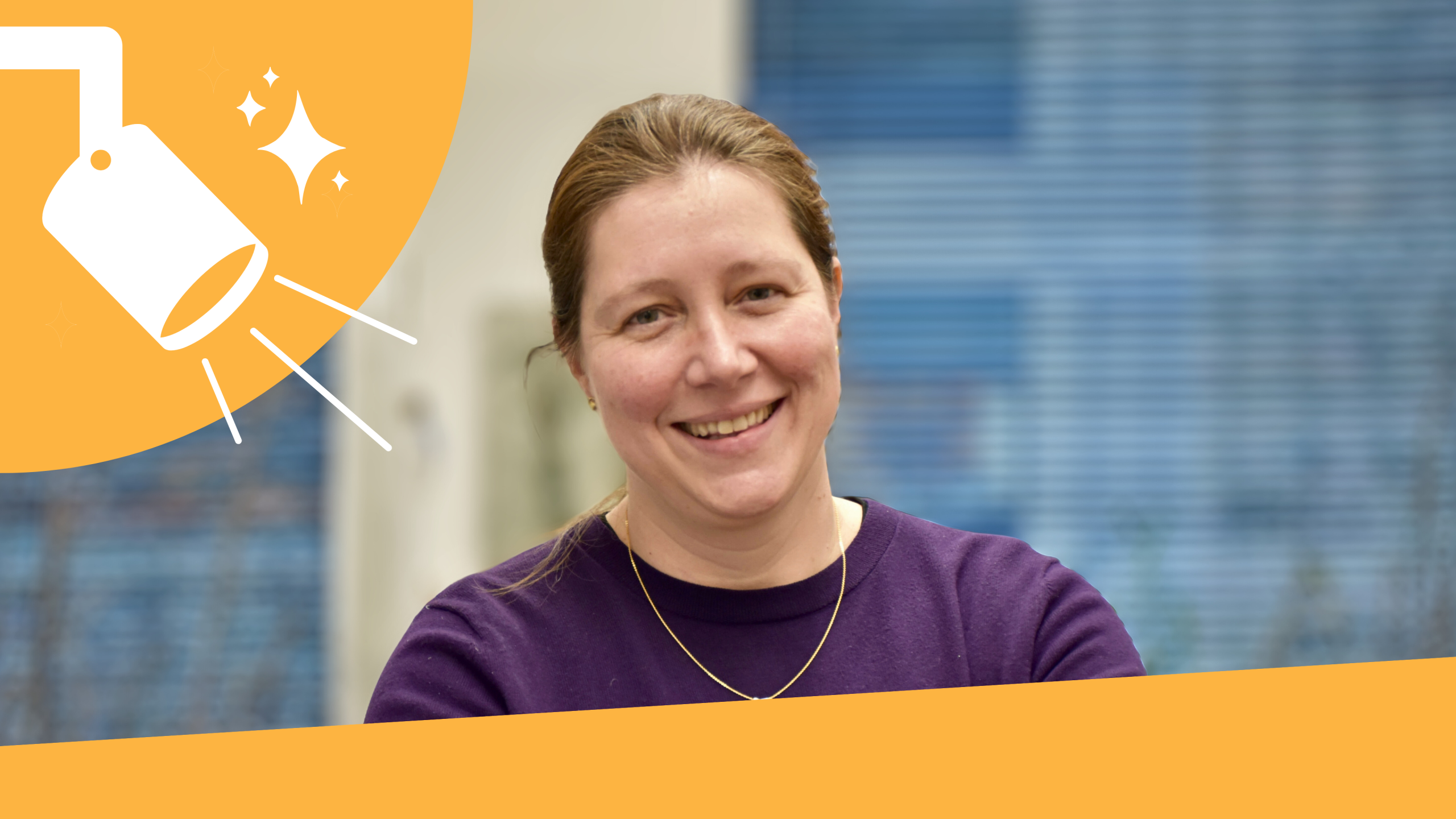
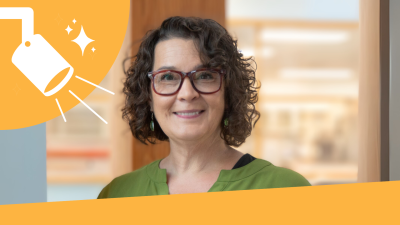
Gill chatted with Monica Colaiacovo to learn how she taps into creativity and inspiration to study the science of reproduction and environmental impacts on reproductive health.
Introducing Monica
Monica Colaiacovo is a Professor in the Department of Genetics at Harvard Medical School (HMS). She is also the Associate Director for the PhD program in Biological and Biomedical Sciences at HMS.
PGED invited Monica to join us as a speaker for our 2025 ‘Venture Beyond the Horizon in Genetics’ forum, where she presented about her eye-opening research on the health impacts of chemical exposures in our environment. Monica is an advocate for teaching, mentorship, and science outreach opportunities, believing that early inspiration and engagement are key to a future in the field for today’s science-curious students.
Gill: Tell me a bit about your work.
Monica: I run a research lab focused on some important questions for reproductive health. We use a model organism, the nematode C. elegans, to study genes that are key to ensuring that the process of cell division that generates egg cells and sperm results in the right number of chromosomes and that these reproductive cells are healthy. We also look at how exposure to environmental chemicals might affect the quality of the egg and the sperm that are being formed. So, we have both a genetic and a more toxicological side of what we do in the lab.
Gill: What do you like to do outside of work?
Monica: I’m not a wonderful painter, but I like to paint. It’s a way to clear my mind and do something that’s still very creative, but different from the research that we do. I also enjoy being with my family, and I love to garden.
Gill: What do you see as the creativity of the scientific process?
Monica:
For me, it all starts with idea formation. You start discussing a topic with people in the lab or with colleagues, or you go to a conference, and new ideas start to form. Sometimes, I’ll be driving my car, and I am thinking about different projects in the lab, and an idea just comes up. I’ll try to write it down quickly on a sticky note if I have one. Technology development is also creative, making new tools and strategies to test a question or get more information. There’s also the creativity involved in how you think about or interpret your data. We’re always asking ourselves, “What does it mean?”
And then, there’s creativity in how you communicate information to different members of your community. Whether they are scientists doing research similar to yours, elementary or middle school kids, or people at a public program run by graduate students. We have to creatively adapt the delivery of our information for different audiences.
Gill: What inspired you to pursue a career in science?
Monica: Growing up, I was very curious to understand how things were working around me. And I was fortunate to have a family that cared a lot about science. Very early on, I gravitated towards biology and chemistry classes in school. Then, I had an experience in a research lab in Brazil, where I grew up.
My 9th-grade teacher’s husband ran a lab in a physics department. She took us on a tour of that lab, and I was completely sold. They created activities and modules where we could do some experiments in the lab that connected with what we were learning in the classroom. There were grad students and undergrads and postdocs, and I could see myself doing research like them in the future. It was a really young and dynamic environment, and it was inspiring for me.
Gill: What’s one project that you’re excited to be working on right now?
Monica: We want to understand what normally allows meiosis, the process of cell division that forms egg cells and sperm for sexual reproduction, to be precise. During cell division, DNA is intentionally damaged by enzymes. Some of the repair of these breaks occurs through what’s called a “crossover recombination event”, when genetic information is exchanged between pairs of chromosomes. This exchange generates a physical attachment between the two chromosome copies. When it doesn’t work properly, you end up with incorrect chromosomal segregation, resulting in eggs and sperm carrying the wrong number of chromosomes. In humans, this can cause infertility or other reproductive health issues. In the lab, we generated a break at a specific region of the genome to study how the break location affects chromosome segregation.
If you think about a chromosome as a pencil, and you divide it into three equal parts, we can test what happens if the break is close to the tip of the pencil, to the eraser, or in the middle. And we found out that the break location makes a huge difference. The breaks have to happen at very specific regions to ensure the crossover succeeds in promoting accurate chromosome segregation. It was the first time we demonstrated this directly using our model. But we still don’t know how the machinery involved in selecting a break and repairing it as a crossover, knows to avoid choosing the breaks that are formed in the less favorable positions. That’s what we’re studying right now.
Gill: You also study the effects of chemicals in the environment on reproductive health. Can you tell me about that work?
Monica: Right, the other questions we’re studying are about the chemicals in our environment. Most of the chemicals we study are called ‘plasticizers’ – they’re used to make plastics more flexible and less brittle. They’re in the inner lining of food cans, dental fillings, capsules of medication, shampoos, and soaps, for example. We’re exposed to these chemicals in a variety of different ways. Many years ago, we wondered if we could use C. elegans to test the effects of these types of chemicals on reproductive health, and if so, understand how exactly they affect reproduction. Currently, we’re focused on phthalates such as BBP, which is a plasticizer present in many cosmetic products. We were surprised to find that, in the scientific literature, there was evidence that BBP exposure can affect reproductive health, but how it might be affecting reproduction was not fully understood.
A former graduate student in the lab tested and defined the exposure range for BBP based on the levels that are found in many human samples. She focused on testing the effects of BBP exposure on female gametogenesis – the production of egg cells. She found that exposure to BBP resulted in altered gene expression and increased oxidative stress. It caused a lot of DNA damage. And because of that, she was seeing many errors in the way chromosomes were segregating during meiosis. Because of her work, we can identify a potential mechanism by which exposure to these chemicals impacts meiosis in humans, and therefore, healthy reproduction.
Gill: You led an activity at your son’s school around your research. How did you break down these complicated concepts into ideas that elementary school students could grapple with?
Monica: I started by asking the students, “What do you think about when you think about a scientist? What is the first image that comes to mind?” Then, I showed them a photo of my lab at the time. There are people from all over the world – it’s a very diverse community – and to them, I think it was a surprise.
Then, I asked them, “What do you think about every day when you’re going into a park or walking in your neighborhood, and what are some of the concerns you have in terms of the impact that we as humans might have on our environment?” I took them from there to the topic of plastics and things that we discard that can be recycled. I showed them a photo of disposable items that you would see, for example, at a child’s birthday party. And I told them a little bit about the chemistry, in approachable terms. I finally asked them to come up with better ways to engineer the products. I split them up into groups to brainstorm.
Each group came up with ideas, and then I gave them even more examples, which they were very surprised to hear about. We went through the process of plastic leaching and why we shouldn’t microwave a plastic container with food in it. And then it was open for Q&A. It was wonderful to hear all of their questions and ideas. It was a lot of fun and very interactive.
Gill: What do you think is the biggest challenge in your field today?
Monica: The restricted or reduced levels of funding for foundational research. I think it’s very shortsighted in the sense that a lot of the treatments and drugs, for example, that society now benefits from stem from these foundational discoveries. And what we could be developing or discovering now will pay us with tremendous benefits 10, 20, 30 years down the line. So that, combined with the impact this has on the next generation of scientists, is devastating. You can see it with students who are deciding what to do after they earn their master’s or PhD degrees, or maybe even they’re younger, and they’re rethinking their entire career plan – “Should I even go into biology or any science path when I go to college?” – that is going to be difficult to recover from.
Gill: What about the greatest opportunity?
Monica: It goes back to creativity. These pressures are making people – professors, directors of PhD programs, administrators, heads of companies, etc. – become more creative and consider alternative solutions. Is there another way we can do this experiment? Is there a more collaborative way we could get the answer we need to move forward with a project? Are there other avenues we can take to find the financial support we need to train the students and get the work done? It’s challenging, but the previous primary funding sources for fundamental science research are now very limited.
We’re coming together in ways that we wouldn’t have thought about before – an example is the amazing symposium that you guys coordinated. It focuses creativity in new directions.
Gill: What is something about genetics that you want more people to know?
Monica: I wish people would understand the value of the model organisms, in terms of how we can learn things quickly and efficiently, and how that can translate into benefits to everyone. And, people must understand how critical it is to continue to fund research using model organisms.
Gill: Is there anything else that you would like to share with our audience?
Monica: Everyone has curiosity. I hope that science will be a career that curious, young people decide is worth pursuing now and in the future. If you feel that science is attractive and you want to be creative in that way, it’s a wonderful path.