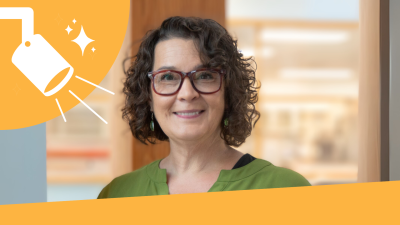
Suzanne Watts Henderson
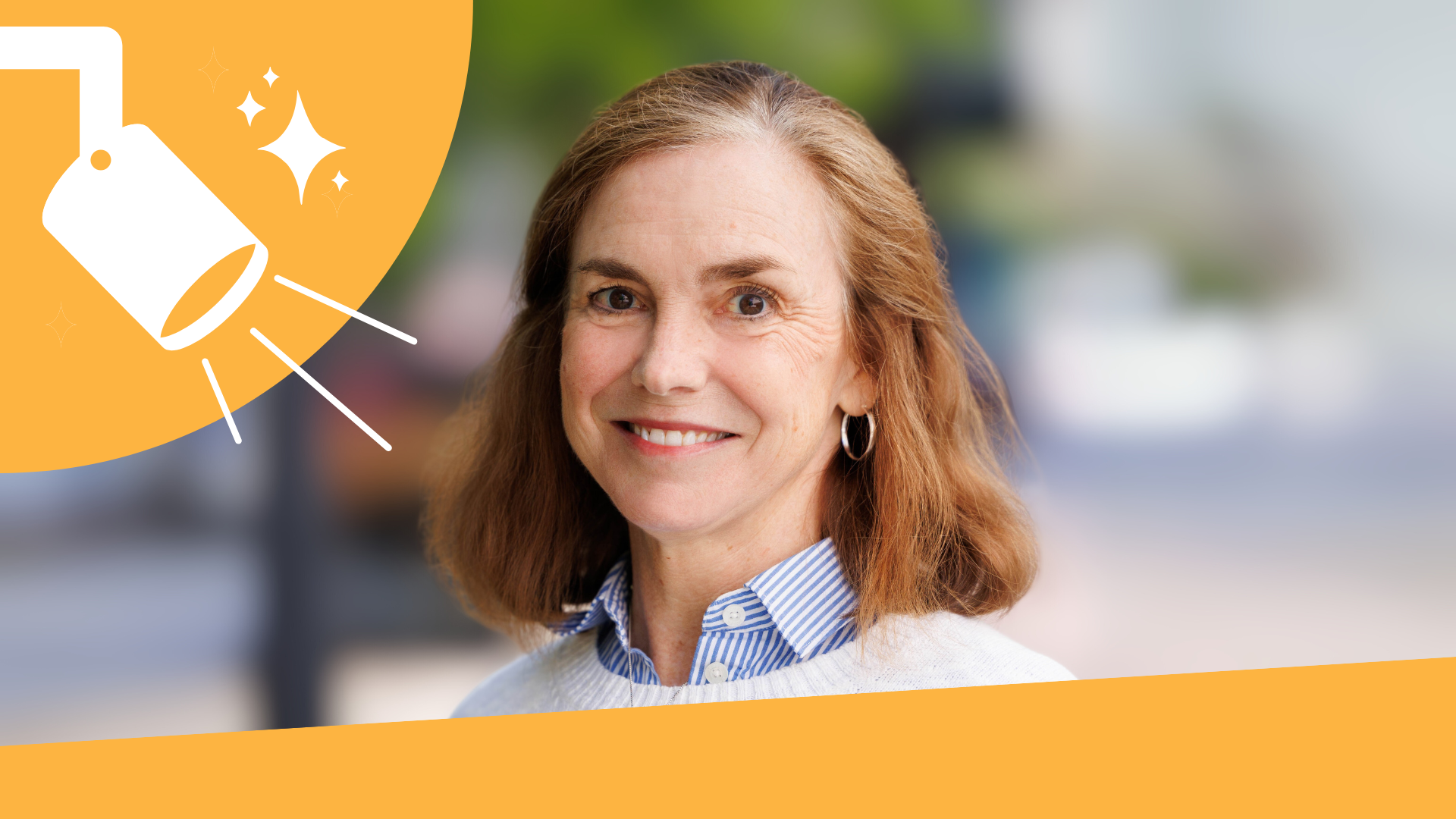
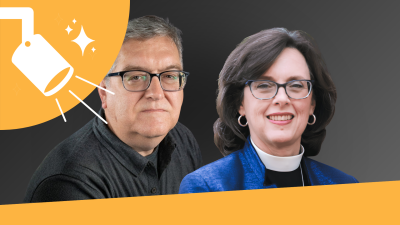
Gill chatted with Suzanne Watts Henderson to learn about her efforts to unlock the potential of our nation’s religious diversity in health-related spaces.
Introducing Suzanne
Suzanne is the Senior Director for Faith & Health at Interfaith America. She has been a guiding light, a connector, and an enthusiastic supporter of PGED’s work since welcoming Marnie into Interfaith America’s inaugural cohort of Faith & Health Fellows. The opportunities, insights, and resources Suzanne has shared have been transformative. We are grateful for her partnership and the impact she’s had on our mission.
Gill: Tell me a bit about what you do.
Suzanne: I joined the Interfaith America team about four years ago as the Senior Director of our Faith and Health sector, where we work to unlock the potential of our nation’s religious diversity in health-related spaces.
We collaborate with leaders across the health ecosystem to raise awareness and build skills to engage our diverse religious and spiritual traditions as assets in human well-being.
Gill: What kind of work were you doing before joining the organization?
Suzanne: I am trained as a New Testament scholar and served as a religious studies professor and Dean of the Chapel at Queens University in Charlotte, North Carolina, for 16 years.
As a faculty member, I benefited from Interfaith America’s work to strengthen my students’ real-life interfaith skills and understanding. The more I worked with the organization, and the more I watched my students “get” the value of interfaith learning, the more inspired I was by Interfaith America’s mission.
Gill: Faith and health is an innovative approach to addressing community challenges. Why did you get involved in this work?
Suzanne: On some level, I laughed when our Founder and President, Eboo Patel, asked me to lead our faith and health work. I said, “Let’s see, I’m not an expert in health or public health. I’m a New Testament scholar. There’s some healing there. That’s my through line.”
There have been folks working at the intersection of religion, spirituality, and health-related concerns for a long time and in many different ways–everything from decades of research around faith-based practices and their effects on health outcomes to the growing recognition of faith-based organizations as vital to public health. We didn’t invent this space, and we aren’t experts in healthcare. That’s why we start by listening and learning. And then we ask, is there a way that we, with our expertise in navigating religious diversity, can help you do what you’re already doing, and have more fun along the way? We come alongside our partners to support the good work they’re already inclined to do.
Gill: Can you share how Interfaith America entered the faith and health space?
Suzanne: During the pandemic, Interfaith America received funding to support vaccine outreach. Our work was based on research that indicated that people who were hesitant about the vaccine were more likely to trust faith leaders than public health officials. We mobilized a network of hundreds of campuses across the country to train students as ambassadors to work alongside faith community partners to bridge gaps in information and access to the vaccine. I was tapped as an external partner based in Charlotte to lead this work in the Carolinas, which was funded by The Duke Endowment.
Another prong of our work emerged from connecting religious studies faculty with health sciences faculty to promote interfaith skills among future health professionals. Even before the pandemic, we’d found that educators often understand the importance of religious competency in caregiving but lack the expertise to teach it, so it was a natural role for us to play as connectors to people and resources who could help them do just that.
Gill: What is one project you’ve worked on that you’re especially proud of?
Suzanne: These efforts to raise awareness and competence at the intersection of faith and health have come together beautifully in a three-year, $3 million project we launched last December, thanks to funding from the John Templeton Foundation. This project will tap leading academic partners to advance curricular learning, community partnerships, research, and public narrative efforts that together will help to normalize the fruitful engagement of religion and spirituality across our health ecosystem.
This project grew out of an interdisciplinary convening we hosted at the Chautauqua Institution in upstate New York in the summer of 2023. Over three days, we shared insights and experiences that highlight the benefit of engaging religious diversity toward human wellbeing in terms of whole-person care, health equity, and health worker resilience. When we stepped back and recognized Interfaith America’s legacy strength in higher education, we saw an opportunity to anchor our efforts in that strength, and fortunately, the good folks at Templeton agreed!
Gill: This sounds like an incredibly impactful project. How do you engage with the faculty?
Suzanne: Our grantees implement their projects while actively participating in a community of practice, which includes faculty from medical and theological education, nursing and philosophy, as well as psychology and religious studies. We meet both virtually and in person, and we have a group of seasoned Fellows who serve in an advisory capacity to the campus teams and our team. So it’s not just a matter of giving them money and sending them off to do the work. We are here with them on their journeys. We want to learn from them. We trust their wisdom, and we know that they have a lot to share with our broader network.
Gill: What do you think is the biggest challenge in your field today?
Suzanne: The challenge is not to miss the moment. Not to be a deer in the headlights, but to be wise about the obstacles we’re facing right now. In my tradition, there’s a line from Jesus’ teachings that says, ‘be wise as serpents and innocent as doves’. Now is a moment to be creative and thoughtful in our response, to recognize where we’ve missed the mark, especially in terms of human- and community-centered care, and to embrace the chance to expand our understanding of ‘wellbeing’ far beyond the clinical setting or moment of crisis. We can look for, and strengthen, what one of our partners calls the ‘leading causes of life’.
Gill: What impact have you seen from this work?
Suzanne: One of our Fellows, David Tillman, leads the School of Public Health at Campbell University in rural eastern North Carolina. He got involved in our vaccine outreach work during the pandemic and, for the first time, built meaningful relationships with faith and Native American communities. Mostly, he built trust, and he learned that they have a lot of wisdom that’s often missed by public health experts. So, when opioid relief funds came from Washington and were dispersed at the county level, David helped lay out a process for decisions about distribution that included people with lived experience, with moral wisdom, with professional and academic assets–all together in one room, all around tables with equal power and voice. The results of their efforts led to a dramatic decrease in opioid-related hospitalizations and deaths, at a rate of more than twice the statewide decrease. Those are lives saved because of a shift in public health strategy that trusts the wisdom of the community to address complex questions.
Gill: Many of the initiatives and stories you’ve shared center around the critical role faith and health play in supporting communities. What are your thoughts on the role of faith and science partnerships in community-focused work?
Too often, people assume that faith and science are more adversaries than friends. But we’ve seen that this just isn’t the case when it comes to strengthening health at the personal and community levels. Every spiritual tradition advances a vision of human wellbeing; every spiritual tradition can inspire not just to live healthier lives but also to care for the flourishing of our neighbors. Our work highlights the positive potential of tapping into these resources. When we do so with authentic respect, we can bridge the (perceived) faith and science divide.
Gill: If there were one project or initiative you could work on with PGED, what would it be and why?
What’s key in our work is authentic engagement with faith communities, faith leaders, and even individuals’ religious or spiritual worldviews—all as trusted partners with real assets to bring to the great work PGED does. IA would be thrilled to catalyze any initiative that weaves together PGED’s remarkable expertise and commitments with faith communities or faith-based organizations in ways that bring mutual benefit. The three verbs in our mission—inspire, equip, and connect—capture IA’s impulses to promote religious pluralism as an asset in civic efforts, including efforts promoting a healthier world.
Gill: What’s your favorite thing to do outside of work?
Suzanne: Besides time with my husband and adult kids (who are scattered across the country), I’m very physically active, usually outdoors. I had a grandmother who lived to be 102 in the city of Chicago; she never drove a car. Her antidote for everything was ‘fresh air and sunshine,’ and I picked that up. I love to hike, run, and do a little biking. Downhill skiing is my absolute favorite thing. I think I was a bird in a former life!
Gill: Is there anything else that you would like to share with our audience?
Suzanne: At Interfaith America, we talk a lot about the potluck supper as our vision for religious pluralism. As one who grew up going to a church potluck every Wednesday night, I resonate with this image very much. Think about it: we can all bring our best dish to the potluck; we can sample others’ dishes, which we might or might not care for. But in the end, we’re all nourished when we expand our table and our palate. In our siloed and polarized world, this way of eating is deeply countercultural, but my study of religion convinces me it’s an image that captures something of our traditions’ highest aspirations for how we might live.