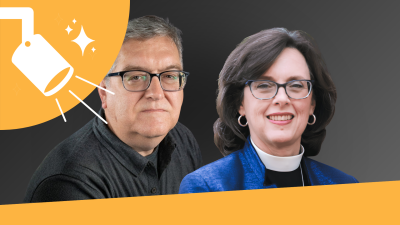
Yvonne Chan & Eric ʻIwakeliʻi Tong
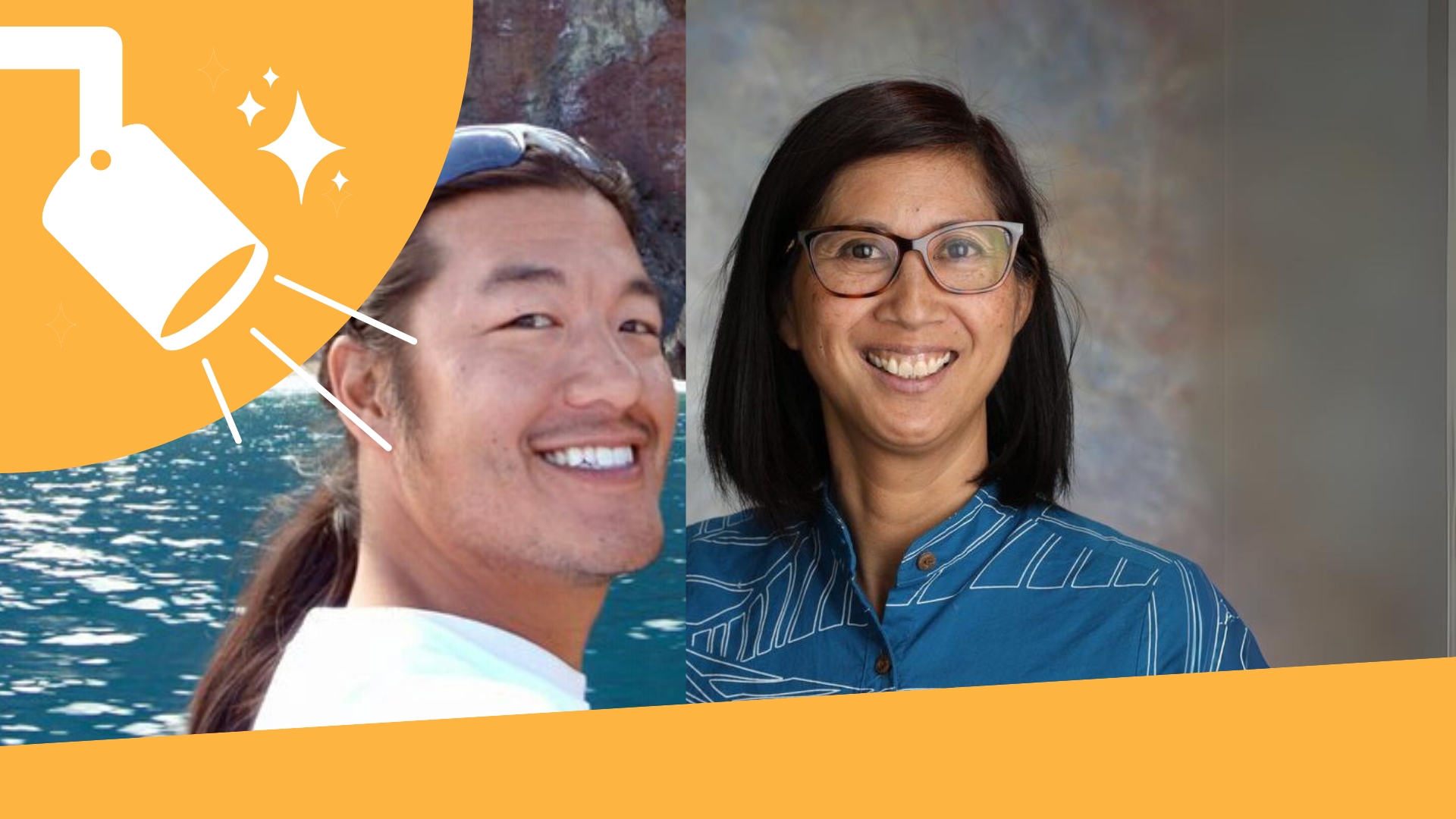
PGED’s Gill McNeil was grateful for the opportunity to connect with Yvonne and Eric and learn about their community science work in Hawai’i.
Introducing Yvonne & Eric
We are excited to share our conversation with Dr. Yvonne Chan and Eric ʻIwakeliʻi Tong of ‘Iolani School’s Office of Community Science and ʻĀina-Informatics Network.
We first met Eric and Yvonne in the early days of their efforts to create inquiry-based genomics and bioethics curricula that center Hawaiʻi’s unique relationships to ‘āina (place). Now, Yvonne and Eric bring hands-on genomic lab science and discussions about science ethics into high school classrooms across Hawai’i. We are grateful for the insights they have shared with our team and during workshops and inspired by how they have grown their program at ‘Iolani into a thriving community of educators.
Gill: Tell me a bit about your work.
Yvonne: At ‘Iolani, my focus is on community science. Community science is about getting students and teachers to do real science in service to the community, like collecting data to provide evidence for management decisions or policy and finding solutions to the problems within our community and the islands.
Eric: The ʻĀina-Informatics Network is a program at ‘Iolani designed to bring genome science and the ethics of those technologies and applications into local high school classrooms. We get the curriculum to schools around the islands, engage students in data generation and hands-on genome science, and explore the ethical dimensions that intersect with the projects.
Gill: Can you share an example of one of these projects centered around a community issue?
Yvonne: Our GMO papaya project, where we help kids witness the consequences of unseen biotechnology across the landscape. Papaya ringspot virus has decimated the papaya industry here in Hawai‘i. Students learn molecular techniques like DNA extraction, PCR, and gel electrophoresis, on plants from their own backyards. We take them through ethical scenarios that get them thinking about the consequences of this biotechnology in a way that’s place-based and culturally tailored.
Eric: One project for students is whole genome sequencing of organisms, usually bacteria, from different landscapes across Hawai’i. Some of those include lava tubes or isolates from agricultural settings, specifically, taro or fish pond areas. We have identified novel antibiotics in organisms isolated from these landscapes, which are undergoing active biocultural restoration and are stewarded by community members. Our understanding of these landscapes is informed by generations of traditional knowledge.
These projects offer fodder for thinking about different forms of exploitation, including biopiracy (a theft of natural, or biological resources). We ask students questions like, ‘What does it mean to be a steward of the knowledge that organisms unveil through their genomes? What does it mean for community partners who steward the landscapes from which these organisms arise or are nurtured? What does it mean for the community to have consent and participation in those conversations?’.
Gill: What sparked your interest in this work?
Yvonne: My background is in conservation and my first job out of college was to come to Hawai’i to work on critically endangered honeycreepers. Now having lived in Hawai’i for about 17 years, I look at my work back then very differently. I’ve learned so much more about the culture. It originally started with the desire to prevent the extinction of native birds, which is now even more significant because I’ve witnessed the extinction. But it’s not just biological extinction; it’s the loss of culture that impacts the whole community.
Eric: The first job that I got out of college was in a nonprofit plant research institute here. While I was working there, there was a public outcry over the University of Hawai’i’s patenting of taro lineages and varieties. I watched elders in our community put themselves on the front lines. Hearing a lack of scientific literacy and nuance in the conversation, I realized that both the community members and scientists were coming from places where they were, in their worldviews, doing what was morally correct. They did not have a shared vocabulary to engage each other meaningfully about the issues at hand. When the opportunity came to help students explore the ethical nuances of these issues facing our community, I wanted to support them in having an informed voice in the conversations.
Gill: It’s powerful that both of you identified community crossroads that drove you to help these efforts… How has PGED helped you with this work?
Yvonne: We’ve used PGED lessons, especially the CRISPR and Gene Editing & the Environment lessons, as a model for some of our curricula.
Eric: What I gain the most from interacting with the resources at PGED are the ethical issues when it comes to personal genetics and biomedical settings or applications. There’s always room for improvement around inclusivity and questioning whether or not our school, as an institution, and our communities are doing the best for students of diverse backgrounds and identities.
Gill: Shifting gears a bit – when you were a kid, what did you want to be when you grew up?
Yvonne: I wanted to be a bush pilot in Alaska!
Eric: I was drawn to something that allowed me to explore and see new places. A scientist was not on my list, but for a long time, I wanted to become a teacher.
Gill: What is one thing that you would like to check off your bucket list?
Yvonne: I want to see the aurora. I’ve been to the Arctic in the middle of winter three times and still have not seen the northern lights!
Eric: I’d love to go for a real vacation that’s not connected to a work trip.
Gill: Thank you both. Do you have anything else to share with our audience?
Eric: Since we’re in the Pacific, we don’t always have visibility into who else is working in this space. We’d love to connect with teachers who are interested in doing fun, creative genome science projects with their students, and learning with us.
To connect with Eric and Yvonne at the ‘Iolani School, email them at communityscience@iolani.org or go to the ʻĀina-Informatics Community Science website.