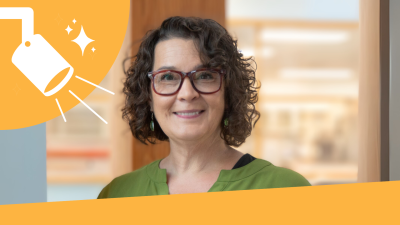
Diane Smith
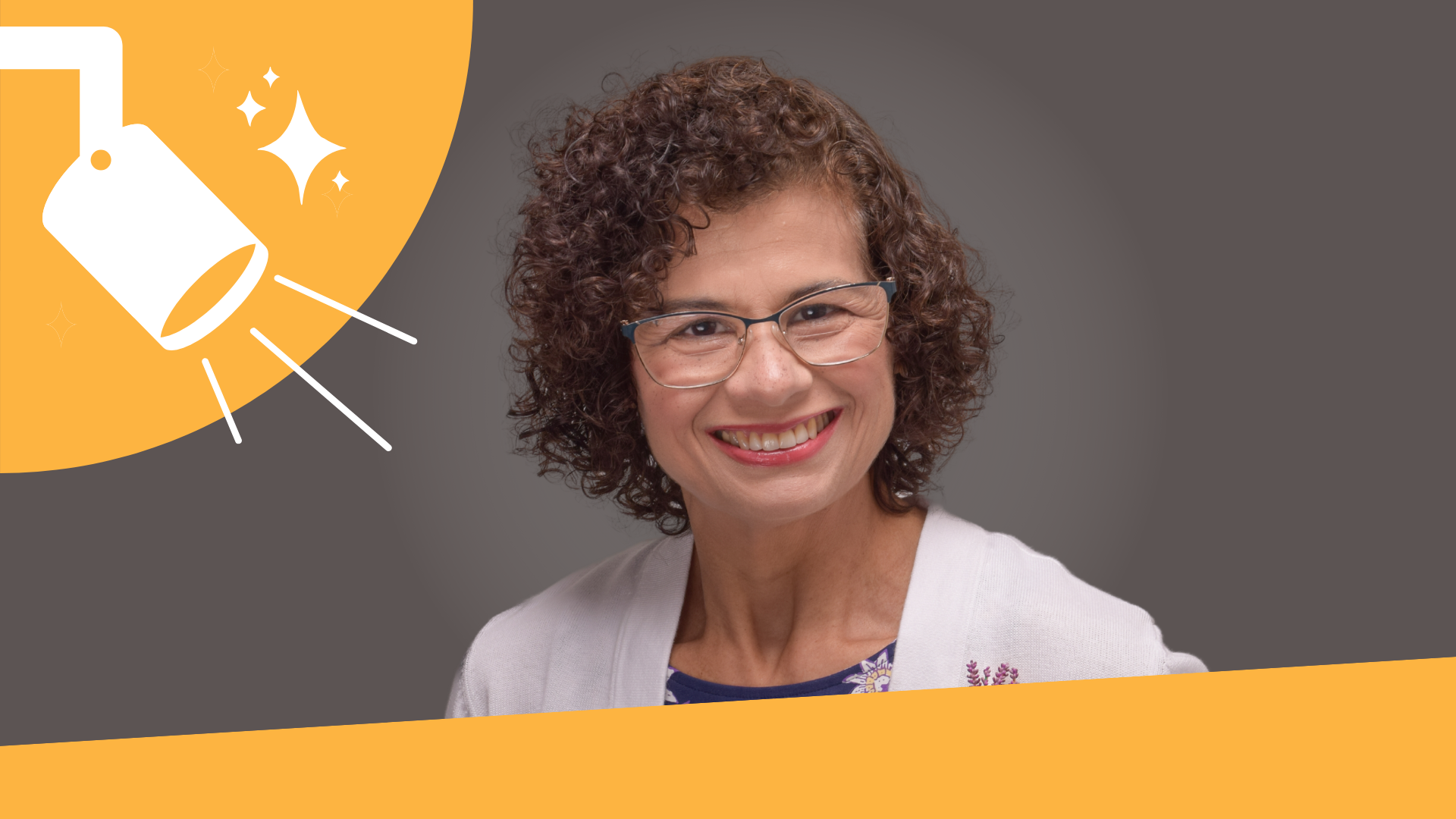
Gill chatted with Diane Smith to learn more about her work as a special education teacher dedicated to creating individualized, hands-on, and engaging classroom experiences for her students.
Introducing Diane
Diane Smith is the founder and principal consultant of a business called “Across the Board Education”, which helps individuals needing special education services and their parents. Previously, she was a special education teacher at Options Employment and Educational Services, a private special education school in Hartford, Connecticut.
PGED connected with Diane as a creative and curious educator looking to provide genetics lessons for her students in the science classroom at Options. Her collaboration with Gill resulted in a 6-part personal genetics learning series, utilizing PGED lessons and activities. Diane’s passion for teaching reminds us how critical it is to meet students where they are, and that we can learn a great deal from their questions and lived experiences. Diane has quickly become a spirited advocate for PGED’s work, and our team is so grateful for her support and partnership.
Gill: Tell me a bit about yourself and your work.
Diane: I am a special education teacher, case manager, and consultant running my own business. I work with small groups or one-on-one with individuals ranging in age from 12 to 22. My clients range in reading level from third grade to college. Many individuals I work with have learning disabilities, and many, if not most of them, are survivors of extreme trauma. Because they’re all in different places, I individualize the learning programs for each person. I try to understand their interests and use them to engage their learning.
Gill: What subjects do you teach?
Diane: I am a certified Special education, reading, and social studies teacher. In addition, I have also been teaching chemistry, earth science, and biology for the past three years, as well as algebra and geometry. Several years ago, I worked at Liberty Science Center, a science museum in New Jersey, where I met a lot of scientists and learned how to lead hands-on science education. I’ve applied this knowledge to my teaching.
Gill: Why did you go into teaching?
Diane: I was a special education student in high school. I had learning disabilities that were finally diagnosed at age 16. I was your perpetual C-student–everyone just thought I wasn’t applying myself, or I was lazy–but I was trying so hard. My mother got me evaluated, and that’s where my information processing disabilities showed up. After that, I went to a private special education high school called the Homestead School, and I flourished. It was a small high school with classes of no more than five students and teachers who cared about us. Going there set me on my path to college to study education. It took me eight years, but I did it, one class at a time. I graduated with a Bachelor’s degree in Elementary Education and then started my career substituting in special education. I eventually got certified to teach special education.
As a newly minted special education teacher, I noticed that most of my students had severe reading difficulties, and they were all reading at levels that were at least four years behind their grade level. I later got my three master’s degrees – one in Reading and Language Arts, one in Risk and Prevention, and the third in Administration Planning and Social Policy – and then earned a Doctoral degree from the Harvard Graduate School of Education in Learning and Teaching with a focus on students with disabilities. After grad school, I worked for the state education resource center, but I felt so removed from students, so I went back into teaching.
As for why I pursued teaching, and especially special education teaching, it always comes back to that feeling of being a student with a disability and getting the short end of the stick. Only if people believe in you do you get what you deserve. Often, the worst thing about a disability is other people’s perceptions of it – that’s what makes it limiting. Having the exposure to teachers who believed in me and gave me experiences early on that broadened my horizons made me realize I wanted to be that kind of teacher one day for my students.
Gill: Is there a specific moment you experienced as a special education student that has influenced your teaching practice?
Diane: My district looked at my grades and said that I should become a hairdresser. I was like, “I can barely manage my own hair–never mind someone else’s!”. I knew being a hairdresser was not what I wanted to do. I wanted to go to college, but no one believed I could make it. That was when I started to learn how to advocate for myself, which is something I try to teach my students and clients today. That’s not the kind of treatment I deserved then, and it’s not what young people with disabilities deserve now.
Gill: What is one project you’ve worked on that you’re especially proud of?
Diane: After you taught my students the PGED lessons, I had a scientist from the Jackson Laboratory set up a lab for us through the Teaching the Genome Generation program. It was a steep learning curve for me because I didn’t take physics or chemistry in high school or college. We all know generally about the double helix, but this was learning about nucleotides, different kinds of DNA mutations, and learning how to separate DNA molecules through gel electrophoresis. I was learning all of this along with my students, and the ability for my students to learn with me was a real highlight.
Gill: I had such a great time working with you to facilitate personal genetics lessons in your classroom. What did you think about that experience?
Diane: It was cognitive candy for me. I’m still thinking about gene editing! I just came back from a trip to Alaska, and was wondering if gene editing can be used to address some of the climate issues that are happening there right now. For example, can you genetically edit the rapidly growing Spruce Beetle population so they don’t eat all the trees? It’s helping me look at the world through a different lens–it’s almost like I’ve had a paradigm shift. I really enjoyed it.
Watching my students get so much out of the lessons is just so rewarding. For example, I had a student who was not a homework person, but after listening to the DNA & Crime lesson, she looked up the cases at home and shared them with her aunt, who is raising her. Knowing a student was so inspired, they brought the learning home–that’s what it’s all about.
Gill: If you could work with PGED to accomplish one new thing, what would it be?
Diane: It would be great to create something hands-on for students to use while learning about genetic engineering and CRISPR. Or an interactive game where students pick a gene and virtually edit it to see what happens. Some schools have access to computers, and some schools don’t, so having both a digital and an analog version of this type of activity would be great to supplement their learning.
Gill: When you were a kid, what did you want to be when you grew up?
Diane: I wanted to be a nun and an astronaut! However, my mom told me we weren’t Catholic, so being a nun was out of the question. As for my astronaut dreams, I just always loved space. I became a Star Trek fan, and that was it–live long and prosper forever! When I worked at the science center in New Jersey, I invited some NASA scientists who worked on the Mars rover to come in and talk about their project before they launched it. It was awesome.
Gill: Is there anything else that you would like to share with our audience?
Diane: I own a business called Across the Board Education. I provide education evaluations, consultations about reading difficulties, individualized education programs, and advocacy for students with disabilities, especially around IEPs for students with learning, emotional, and behavioral concerns.
It’s fulfilling to work with students and their parents. With parents, it brings great satisfaction to empower them and show them how to advocate for their child’s needs, especially through the Individualized Education Program process. I enjoy teaching, especially after interpreting assessments to identify particular issues and design creative and effective ways for clients/students to succeed.
I’d also like to share some advice for teachers: don’t be afraid to teach genetics. There are many helpful resources out there, and what made PGED so special is that it makes Genetics so understandable and approachable. Students will encounter this science in their daily lives as they grow up, and it’s worth tackling with them now, even if you’re nervous or feel like you don’t know enough about it. You can teach it from different angles. The DNA & Crime lesson – that’s social studies and civics. The CRISPR gene editing lesson – focus on the technology’s impact on medicine. You could even just explore with students the options for careers in genetics. There are so many ways to approach it–it doesn’t just have to be nucleotides.