Richard Lumb
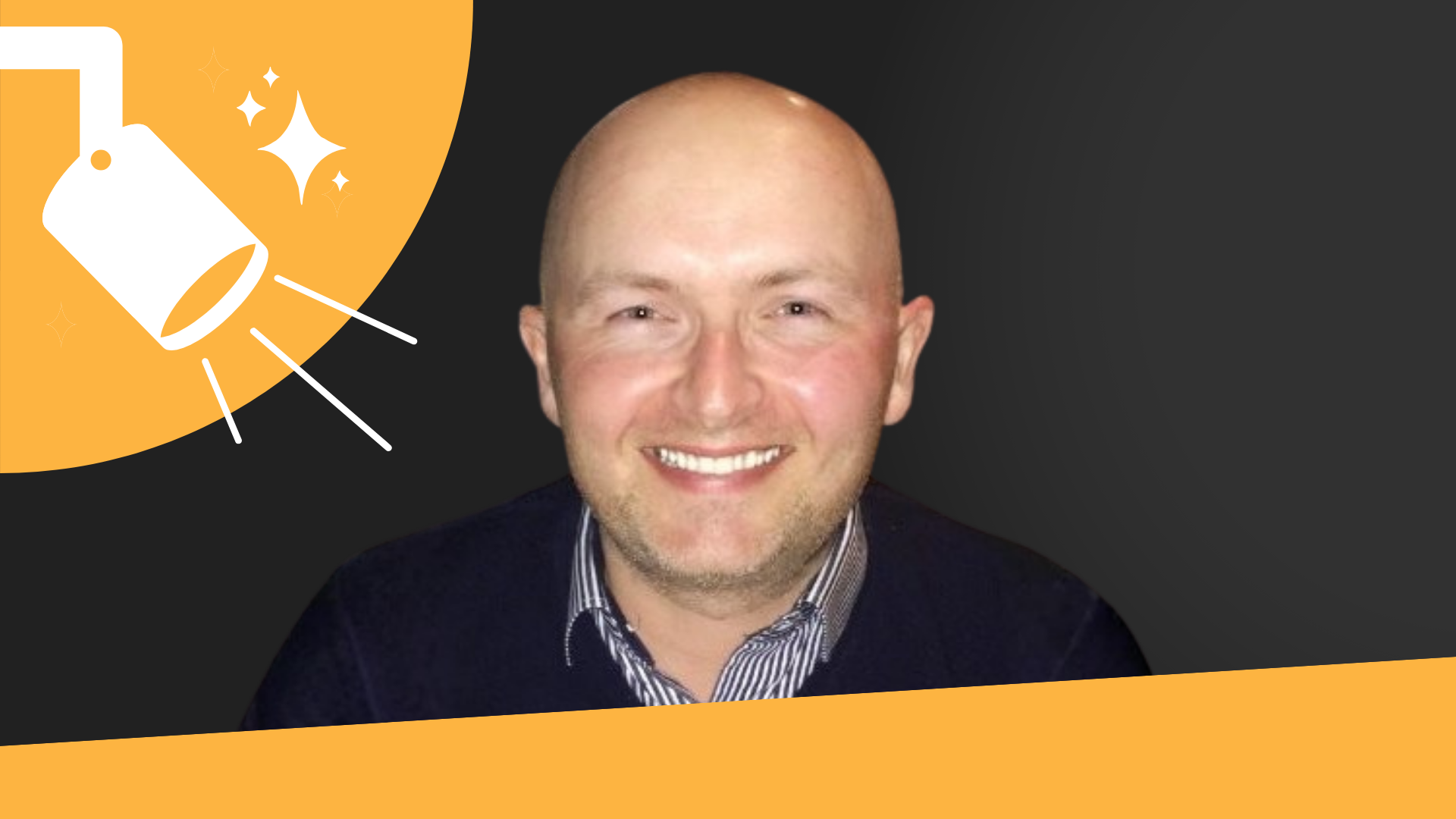
Gill chatted with Richard Lumb to learn about his efforts to magnify the impact of science innovation for patients by changing how information is gathered and shared.
Introducing Richard
Rich Lumb is the founder and CEO of Front Line Genomics, based in the UK. PGED connected with Rich through events about public engagement in science.
We are deeply inspired by Rich’s dedication to changing the way we gather around and share scientific information.
Gill: Tell me a bit about yourself and your work.
Rich: I’m the founder and CEO of Front Line Genomics. At Front Line Genomics, we have a social mission to deliver the benefits of genomics to patients faster. We do this by inspiring scientists to move forward with their projects by engaging and embracing genomics and associated technologies. Our thinking is this: if we can help scientists move from point A to B a little bit quicker, we can improve the speed of adoption of genomics technologies, so that patients benefit more quickly. Essentially, we’re trying to bridge the gap between the capabilities of different technologies that are being developed and their ability to deliver better patient outcomes.
Gill: How did you come up with the idea for Front Line Genomics?
Rich: I’m a scientist by training. I worked at a lab for a while and earned a PhD. I was working for a company doing life sciences when my dad was diagnosed with a cancer called mesothelioma. It was devastating. We weren’t sure what the timeline would be, but we knew that he would eventually pass away. At that time, we were also approaching the “thousand-dollar genome” and a lot of new, exciting technology–but I realized that none of it was being used to understand my dad’s disease. It took a long time to get a proper diagnosis, and so little was done with the available technology to inform his treatment. After this experience, I wanted to accelerate the benefits of this incredible technology and help make an impact for patients, like my dad. After he died, it took me four years to launch Front Line Genomics.
Gill: You developed an innovative business model for Front Line Genomics: a festival that combines different areas of the life sciences industry. How did you develop that concept?
Rich: Previously, I was doing events for scientists within pharmaceutical companies. Our conferences were high-quality and with brilliant people, but I couldn’t help thinking about all of the people who would benefit from attending, but never be able to afford the price of a ticket. Then, I started to think about how it’s not just the pharmaceutical scientists who should be there, but all of the people who influence patient care. I figured that if I could break down the silos in research and healthcare to include patient organizations, patients, researchers, clinicians, technologists, investors, and even policy makers at these kinds of conferences, then we could transform it into something much bigger: an entire ecosystem at a single event.
Gill: How do you work towards your social mission?
Rich: We optimize the business around social impact. In previous places I worked, the whole operation was optimized around profit, and I wanted to do things a different way. So, we ensure that as many of our products are available for free to as many people as possible. About 90% of our revenue comes from sponsorships and exhibitions, which subsidize people to attend for free. This is important for us because we support people at every stage of their career and in different domains, from early-career scientists right through to CEOs and policymakers. We open up access to scientific information at basically no cost.
Another principle is sharing collected intelligence. Usually, scientific intelligence comes at a premium, and we want to make it accessible to as many people as we can. Across all of our products – the festivals, webinars, reports, boardroom style meetings, and more – we capture and share how experts are thinking and overcoming problems, and we share that intelligence widely.
Gill: Why do you think it’s important to share collected intelligence?
Rich: Science and medicine are changing so fast. AI tools like ChatGPT are exciting and can help researchers and clinicians rapidly get up to speed with new developments. But science is moving so quickly. We also need to capture and share the very latest thinking in cutting-edge science and medicine that you won’t yet find on any LLM, because it’s locked in the heads of experts.
We’re becoming reliant on patients to educate themselves about their care and bring that into conversations with their doctors. We need to rethink how this kind of information gets to the people who really need it, and how they can use it. That’s one of the reasons why I love PGED. Your work, going out into communities, you’re not just trying to educate people, but listen to them as well. I’m a huge fan.
Gill: If you could work with PGED to accomplish one new thing, what would it be?
Rich: One thing that I have always wanted to do with the festival is have a third day where we open the doors to everyone in the community. For example, it could be school kids, university students, the general public, patient organizations, and more. Unfortunately, we never got support for this idea because it would bring our costs up significantly, and not work well for our exhibitors. But when I got connected with PGED, I realized you were doing similar work. So I’ve always been supportive of it, and would like to help PGED figure out ways to expand operations and make an even bigger impact. I’d also love to bring PGED’s story and mission to our audience, maybe through a podcast or another medium.
Gill: When you were a kid, what did you want to be when you grew up?
Rich: I wanted to climb Mt. Everest and then canoe down the other side. I don’t know what was going on in my head! At some point, I wanted to be a boxer as well, not realizing that I was going to get absolutely mauled. Later, I wanted to be a doctor. I think I would have found it rewarding, but the emotional elements would have been difficult. And then I wanted to be a zoologist because I love the idea of taking lessons from the animal kingdom and applying them to challenges that affect people. And then I segued back to physiology because I love human biology. That’s what I studied in Uni.
Gill: What else would you like to share with our audience?
Rich: I’d love whoever is reading this to find out more about our two Festivals (in London and Boston), and – if you think you will benefit from attending – find a way to get there. I think it’s important that access to cutting-edge science does not depend on your ability to afford a ticket, particularly at the moment, when funding for travel to science events is drying up. We’re living within a period of significant technological, scientific, and political upheaval. We need to keep the sharing of science moving and support each other to make progress, because at the end of every life sciences project, no matter the transformation that’s happening, patients are still waiting.
You can find out more about the Festivals and Front Line Genomics at www.frontlinegenomics.com.