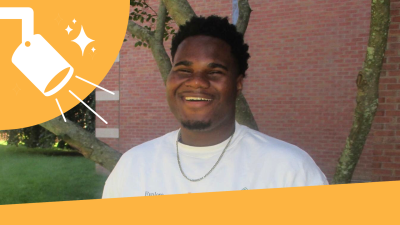
Vida Mingo
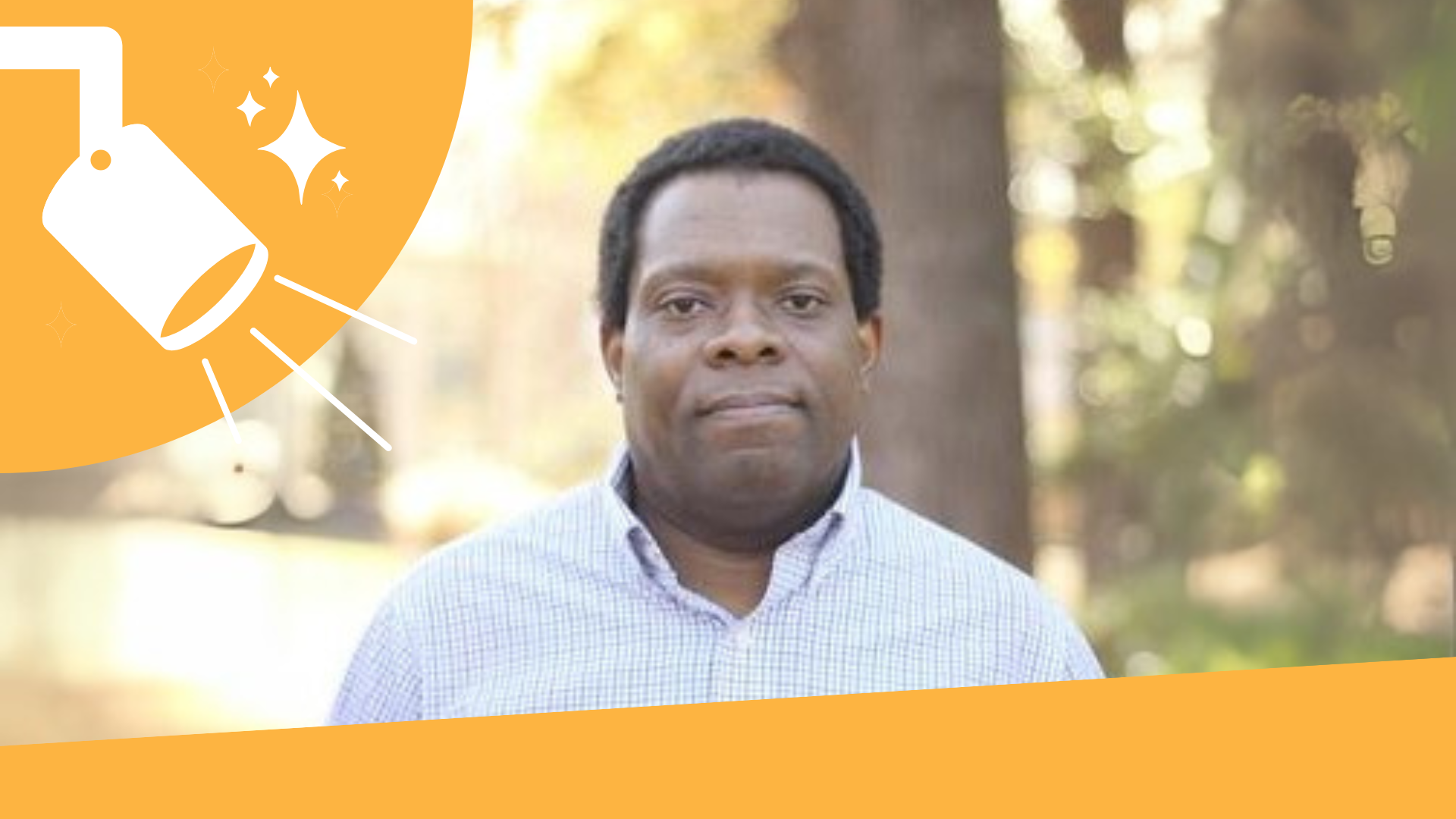
Gill chatted with Vida Mingo to learn more about his dedication to connecting communities with scientific information.
Introducing Vida
Vida Mingo is a senior lecturer of biology at Columbia College in Columbia, South Carolina, and serves on the Board of Directors for the Genomics Education Partnership (GEP). He is also the Chair of the Board of Directors of the South Carolina Autism Society.
PGED met Vida through our online workshops, and we were blown away by the experiences he shared bringing our lessons to life with students at Columbia College. In 2024, we had the chance to collaborate with Vida on a workshop for genetics educators at The Allied Genetics Conference.
Gill: Tell me a bit about what you do.
Vida: I love to learn and I’m passionate about science, particularly genetics. I’m a biology professor at Columbia College. This spring, I’m teaching human health and epidemiology, fundamentals of anatomy and physiology, and foundations of biology. I try to teach my classes with engaging activities and discussions. My days are pretty full between teaching classes and labs, GEP, and serving as Chair of the South Carolina Autism Society.
I also work with the Omicron Iota Lambda chapter of Alpha Phi Alpha fraternity to develop leaders, promote brotherhood, promote academic excellence, and provide service and advocacy for communities.
Gill: Why did you decide to study genetics?
Vida: I never took genetics as an undergrad because it didn’t fit into my schedule. I was advised to take an evolution class, and was skeptical. But, I absolutely enjoyed the class. I worked on an evolution project and I enjoyed it so much that when I was in graduate school, I took virology to study viral genetics. I just wanted to know more about genes.
Gill: You were interested in genetics and also developed an interest in DEI. How did that happen?
Vida: I had an opportunity to attend the University of South Carolina to work on a project about the genetics of human origins. What brought me there was a group of individuals known as the Gullah. They are a group of individuals from the coast of Virginia down into Florida. They are some of the ancestral Africans that were brought many years ago to the South Carolina Islands. Their genetic ancestry is quite different from those of mainland African Americans. While I was looking at their gene structure, I was also curious about their history and linguistics. Then, I started thinking of my genetics class with a social justice, equity, and inclusion framing.
Gill: How did the Genomics Education Project get started?
Vida: Sarah Elgin had a vision to transform genetics education for students at WashU in St. Louis. She believed science should be equitable for everyone, whether it was the students at WashU, a community college, or a historically Black college. Along with other WashU faculty, she received funding to offer undergraduate research experiences. They started hosting workshops and training for individuals to learn the most current genomics techniques and later began to develop the curriculum. I joined in 2017, and the experience was transformational.
My colleague Steven and I are co-founders of the GEP’s diversity, equity, and inclusion committee. Although GEP has always done this kind of work, we didn’t have a dedicated committee. We built it from the ground up in 2020.
Gill: What is one project you’ve worked on that you’re especially proud of?
It was a collaboration with PGED. Last spring, Alma Rodriguez Estrada, Marnie, Rob, and I presented a two-hour workshop at the Genetic Society of America conference on sickle cell. Sickle cell disease is often taught in terms of carrier status. We looked at it more from a social lens and the human impact. This was sparked by an experience I had giving a guest speech for the James R. Clark Memorial Sickle Cell Foundation in South Carolina.
Several people in attendance were sickle cell warriors, but they didn’t know much about the disease. Nobody had ever explained it to them. It clicked for me then–I teach this in class every semester, and yet here is a community living with this and they don’t know why it impacts them the way it does. It helped me understand that there’s a disconnect between the science I’m teaching and the community impacted by it. I hope that the individuals who attended our workshop went back to their home institutions and made their own community impact.
Gill: What do you think is the biggest challenge in your field today?
Vida: Getting people to understand that genetics touches every aspect of life. Many people think genetics is just Punnett squares. But we now know that genetics can transform your life–whether it’s learning about a family history of Alzheimer’s or breast cancer, genetically modified organisms, or technologies like CRISPR.
The weaponization of science is also one of the greatest challenges we’re facing. Our society is increasingly using science to justify harmful ideas. Science is a tool that should be used to help humanity.
Gill: What do you think is the biggest opportunity?
Vida: We have a variety of ways to disseminate meaningful information. Whether it be in-person gatherings, Zoom meetings, webinars, podcasts, Kahoot, TikTok, Netflix, or hip-hop. There are so many ways that science can be shared with the hearts and minds of Americans.
Gill: If you could work with PGED to accomplish one new thing, what would it be?
Vida: We could have a community event for people who want to get started in genetics education. The event could help them bring these kinds of discussions into their communities, such as a community center or faith-based organization. We could give them talking points that help them share their appreciation for and curiosity about science with others.
Gill: What’s one thing you want to check off your bucket list?
Vida: I love women’s basketball. I would love to go to a NCAA Women’s Final Four championship. Of course, I would like us to win another national championship, too. Shout out to coach Dawn Staley of the South Carolina Gamecocks.
Gill: What advice would you share with our audience?
Vida: One of my mentors would always quote Benjamin E. Mays: “Whatever you do, do it so well that no one, dead or alive, could ever do it better.”
And whatever you engage in – be curious, be passionate, and just do what you love.