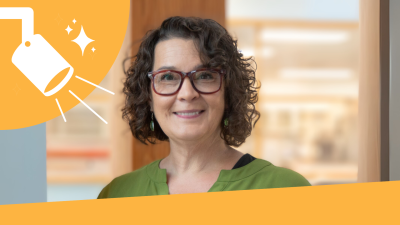
Trey Lawrence

Gill chatted with Trey Lawrence to learn more about his passions for research and community involvement on his college campus.
Introducing Trey
Trey Lawrence is a junior at Tufts University, studying biology with a minor in political science. Trey was PGED’s first-ever Civic Biology Intern through a unique opportunity in collaboration with the Tufts Civic Biology Fellowship program.
The program’s curriculum is centered around civic engagement, cultural humility, and equity in science. Trey worked closely with Marnie and Gill to prototype and test a STEM festival booth kit about the science and social impacts of de-extinction. View and download the kit from the Resource Hub!
Gill: Tell me a bit about what you do.
Trey: I do a lot of extracurriculars on campus! I’m on the executive board for the Tufts Daily, which is our independent student newspaper. I’m also on a competitive step team. I work with our counseling and mental health services as a student mental health rep.
I am also a peer mentor with the Africana Center, which is one of our diversity student centers. I also do research in the molecular micro department at the Graduate School of Biomedical Sciences on cholera phage genetics.
Gill: I am amazed that you fit in so many activities during your day! I’m curious to know why you decided to study biology.
Trey: Biology has always been my favorite topic in science. I guess I’m a curious person. And, my favorite thing about research is that you can ask lots of questions. I just find that so cool, contributing to knowledge that makes an impact on human health.
Gill: What inspires you to be involved on your college campus?
Trey: Certain communities at Tufts have been really impactful for me. I wanted to support other people the way they supported me coming into college. This is why I do my mental health advocacy work. I care about people having the space they need to have open conversations about mental health. And with the Africana Center, I wanted to give the same kinds of advice and support to other students that I got in my first year.
Gill: What’s one project that you are especially proud of?
Trey: Probably my summer research project. I was working with vibrio cholerae, which is a bacteria that causes diarrheal disease. I wanted to see whether there would be fitness defects if we knocked out some of the bacteria’s enzyme-producing genes. I’m going to present the research at a conference soon.
The research was new to me, and I learned a lot about science and myself in the process of working on this project.
Gill: What do you see yourself doing after graduation?
Trey: I can see myself pursuing a PhD, whether it’s in microbiology or immunology or something else.
Gill: You did great work as PGED’s first Civic Biology intern. If you worked with us again on another project, what would it be?
Trey: Working on the de-extinction poster with you and Marnie was really cool. I also enjoyed learning about genetics and different applications generally. Often you don’t think about the applications of what you’re learning in the classroom, so it was nice to learn and talk about that with you. I’d be happy to create a poster on a different personal genetics topic. And, I would love to help out with an in-person PGED community event.
Gill: What’s one thing that you would like to check off of your bucket list?
Trey: I want to go on a spring break trip to Europe!
Gill: Do you have any advice that you want to share with fellow undergraduate students?
Trey: Be open to pivoting. If you want to change your major or change your mind on your career path – go for it. If you want to explore different academic interests or extracurriculars, definitely take those opportunities. You never know what you might like unless you try it.