What Does the Card Deck Include?
- 25 discussion cards across 5 categories. Each discussion card contains a ‘Big Idea’ statement and a ‘What If…’ question.
- 15 challenge cards that offer an action, question, or idea to consider with a discussion card.
- 2 rule cards for reference during gameplay.


Ancestry
Ancestry testing companies should have the right to sell customers’ genetic data to third parties.
Examples of Reasons to Agree
- Because genetic ancestry tests are very popular, these companies have large stores of data that could be very useful to researchers.
- As long as the companies inform people upfront that their data might be sold, then I’m fine with it.
- If the ancestry testing companies can make money by selling their customers’ data, perhaps they can offer their products to customers for a lower price.
Examples of Reasons to Disagree
- Genetic information is private and owned by the person it belongs to. It should not ever be sold.
- Only the people who the genetic information comes from should be able to sell their genetic data.
- I need to know exactly what my genetic information would be used for, like conducting research or making a commercial product. Unless that is disclosed before I provide my sample, then I’m not okay with it.
- If they sell my data to make a profit, then I deserve some of the money.
What if customers were compensated for providing their data?
Some people object to ancestry testing companies having the right to sell customers’ genetic data because they don’t think a company should profit from a person’s genetic information while that person gets nothing in return. Compensating individuals may change their minds, especially if each individual can choose if and when their data is sold, and are made aware of exactly how the information is being used.
Adopted & donor-conceived children should have access to all known information about their family history & ancestry.
Examples of Reasons to Agree
- Genetic information can have important implications for some health conditions. Adopted and donor-conceived should have access to as much of this information as possible.
- Parents of adopted and donor-conceived children should be able to make the most suitable medical decisions for their children.
Examples of Reasons to Disagree
- Biological parents of adopted children and sperm or egg donors may want to remain anonymous and should have the right to keep their genetic information private.
- Having access to this information might complicate how the child feels about their identity while growing up.
- This is too much information for a child to know early in life. Maybe this would be okay once they’re more mature.
What if you were the biological parent of an adopted or donor-conceived child?
Thoughts about adopted or donor-conceived children’s rights to have access to information about their family history or ancestry might change depending on whose perspective you approach this question from. While not all biological parents will feel the same, some might favor their right to privacy over the right of a child or their legal parent to have access to this information.
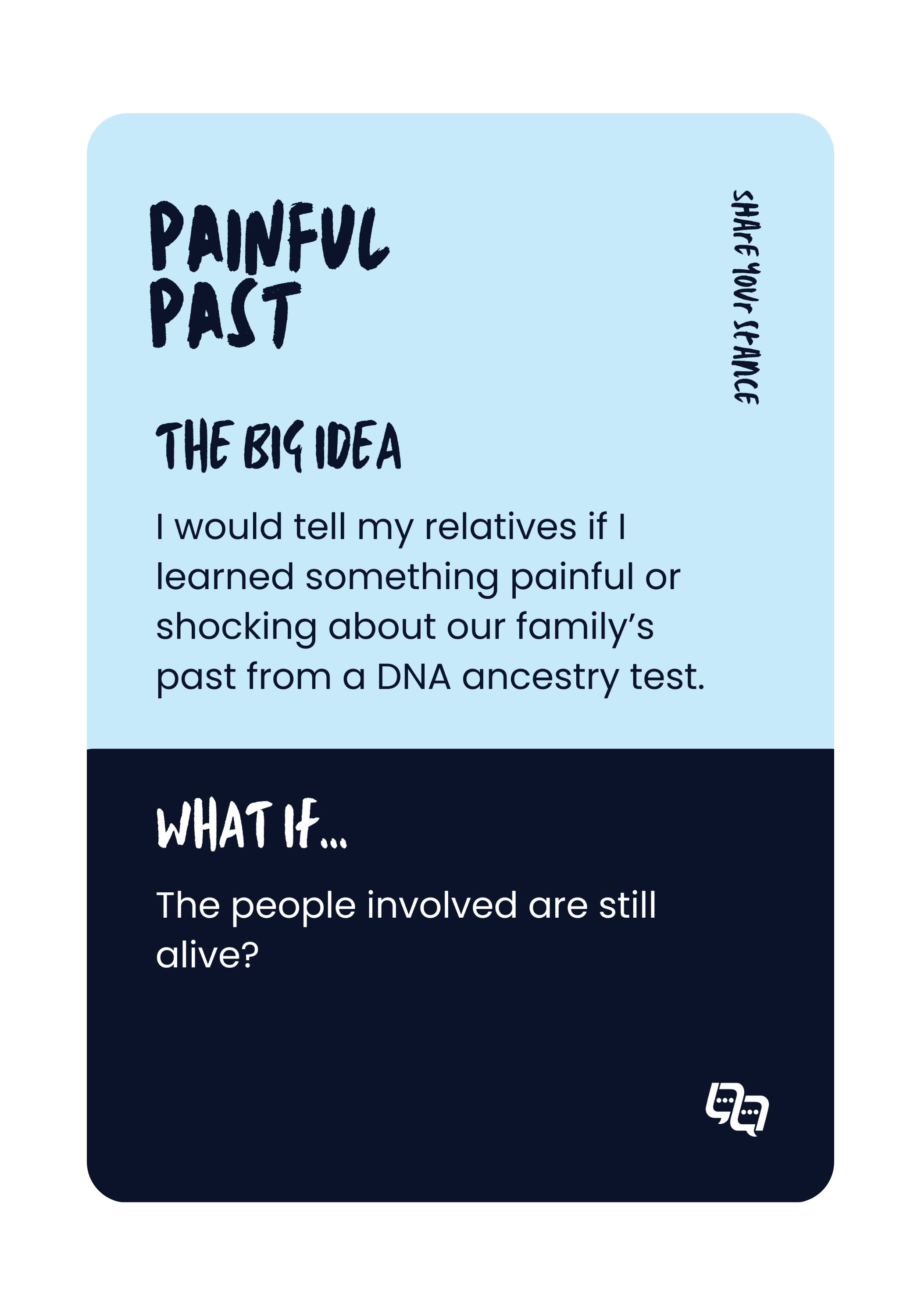
I would tell my biological relatives if I learned something painful about our family’s past from a DNA ancestry test.
Examples of Reasons to Agree
- It’s important to me that my relatives know about our family history, regardless of whether the information is positive or negative.
- We can learn from the past and the mistakes of our ancestors.
- It might help us piece together some things we’ve always questioned about our family history.
- The past can impact present and future generations.
Examples of Reasons to Disagree
- This information might change how we view our personal or family identity, which we deeply value.
- I don’t think it should matter today, since it happened in the past. We should just move on.
- Why would I want to make people upset? I would just keep it to myself.
What if the people involved or affected are still alive?
Occasionally, when viewing the results of a DNA ancestry test, the testee learns surprising or painful information about their family history. For example, it might be revealed that their family members were enslaved at a point in history. Incestuous relationships and children born of them might also be identified. Family members might learn that some relatives are not biologically connected to them. Or, an unknown medical condition might become apparent in their lineage. For these reasons, and because the information learned might affect living relatives and their relationships, it’s important to be aware of these potential outcomes before taking a DNA ancestry test.
I would take a genetic test to connect with unknown relatives.
Examples of Reasons to Agree
- I know I have extended family members I’m not familiar with. This might be an opportunity to connect with them.
- I was adopted at a young age. It would be great to connect with some biological relatives.
- I’m interested in genealogy and want to build my family tree.
Examples of Reasons to Disagree
- If I don’t already have a relationship with my relatives, I don’t need to know them.
- I’m afraid of what I might learn about them.
- I’m adopted and have no interest in connecting with biological relatives. My family is who raised me.
What if you learned you had a sibling you were not aware of?
Connecting with unknown relatives can be beneficial or detrimental, depending on what one thinks they will learn. Some people believe making this type of connection would enrich their lives. For others, it might strain existing relationships or add unnecessary complexity to their lives. Learning you had an unknown sibling could be either an incredible or devastating finding because of what it would reveal about your biological parents or other relatives.
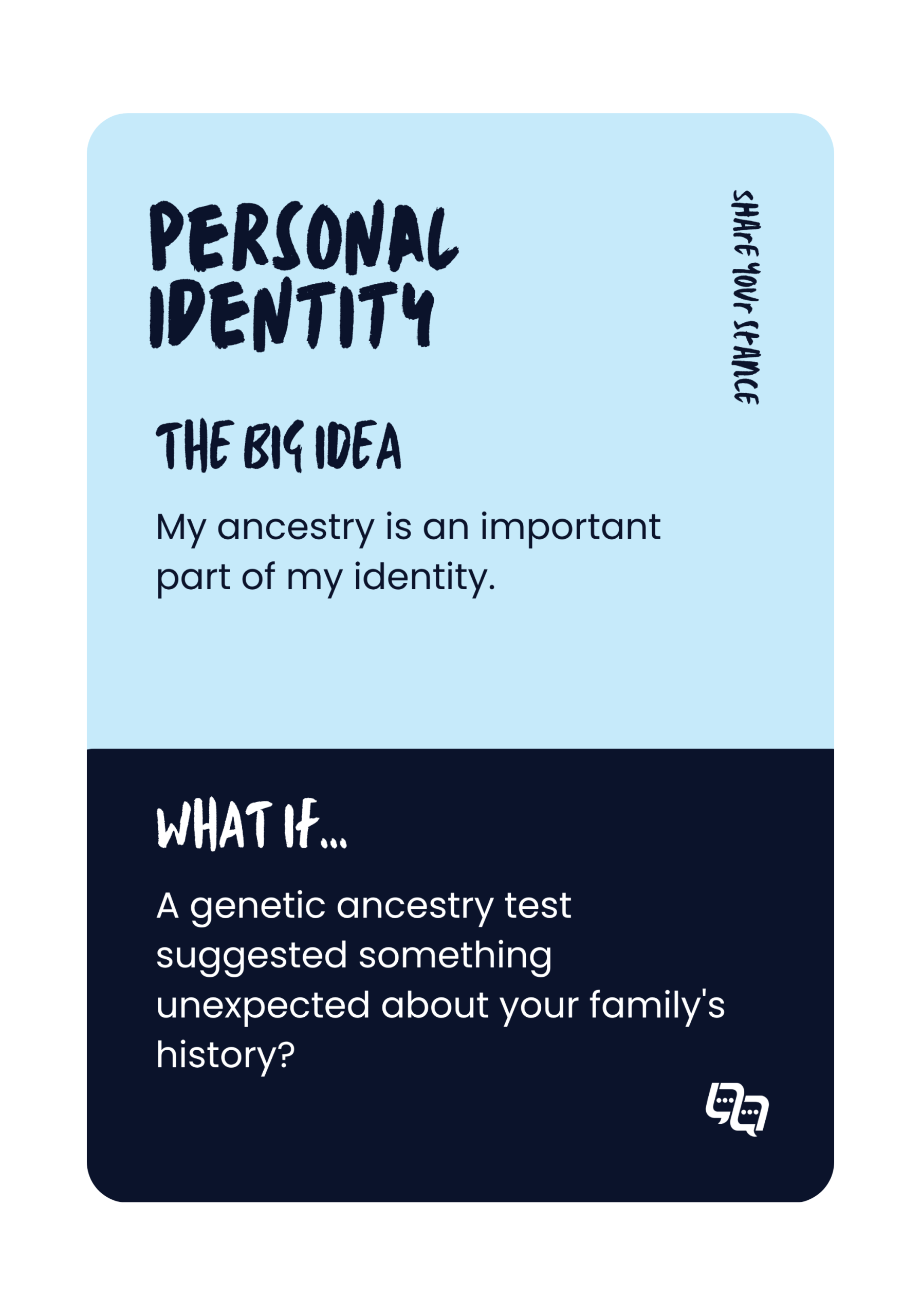
My ancestry is an important part of my identity.
Examples of Reasons to Agree
- My ancestry is my cultural heritage, and I am proud of my culture.
- My family often talks about our history and stories passed down through generations.
Examples of Reasons to Disagree
- My identity is shaped by me as an individual–not my ancestry.
- My traditions and culture matter more to me than what a genetic test says about my ancestry.
What if a genetic ancestry test suggested something unexpected about your family’s history?
Many people have expectations of what a DNA ancestry test will suggest about their family history. Whether or not a person believes their genetic ancestry to be an important aspect of their identity, learning that their ancestry is different from stories passed down from family members can be surprising, with positive or negative implications. Gaining this knowledge might similarly impact a person who was adopted or has little knowledge of their biological family background.
Resources compiled for deeper exploration of these topics through various media outlets:
- Ruwich J. (2025). Judge OKs sale of 23andMe — and its trove of DNA data — to a nonprofit led by its founder. NPR.
- Jiminez, C. (2024). My Whole Life, I Embraced My Latina Identity. Then I Took A DNA Test That Changed Everything. Buzzfeed.
- DeMarco C. (2023). Adoption and cancer risk: Should you get genetic testing?. MD Anderson Cancer Center.
- Segalov M (2021). ‘I took a DNA test and found a new family’: the drama and joy of meeting long-lost relatives. The Guardian.
- CBS News (2020). DNA tests and family matters. CBS News.
- Graf, N (2019). Mail-in DNA test results bring surprises about family history for many users. Pew Research Center.
- Hunt E. (2018). ‘Your father’s not your father’: when DNA tests reveal more than you bargained for. The Guardian.
- Watt E. and Kowal E. (2018). Why DNA tests for Indigenous heritage mean different things in Australia and the US. The Conversation.
- Yaeueki S (2018). I was raised as a Native American. Then a DNA test rocked my identity. The Guardian.
- Roth, W.D. (2018). Genetic ancestry tests don’t change your identity, but you might. PBS.
- Mattloff, E. (2018). If i’m adopted, should I have DNA testing? Forbes.
- Rosenbaum E. (2018). Five biggest risks of sharing DNA with consumer genetic testing companies. CNBC.
Ancestry testing companies should have the right to sell customers’ genetic data to third parties.
Examples of Reasons to Agree
- Because genetic ancestry tests are very popular, these companies have large stores of data that could be very useful to researchers.
- As long as the companies inform people upfront that their data might be sold, then I’m fine with it.
- If the ancestry testing companies can make money by selling their customers’ data, perhaps they can offer their products to customers for a lower price.
Examples of Reasons to Disagree
- Genetic information is private and owned by the person it belongs to. It should not ever be sold.
- Only the people who the genetic information comes from should be able to sell their genetic data.
- I need to know exactly what my genetic information would be used for, like conducting research or making a commercial product. Unless that is disclosed before I provide my sample, then I’m not okay with it.
- If they sell my data to make a profit, then I deserve some of the money.
What if customers were compensated for providing their data?
Some people object to ancestry testing companies having the right to sell customers’ genetic data because they don’t think a company should profit from a person’s genetic information while that person gets nothing in return. Compensating individuals may change their minds, especially if each individual can choose if and when their data is sold, and are made aware of exactly how the information is being used.
Adopted & donor-conceived children should have access to all known information about their family history & ancestry.
Examples of Reasons to Agree
- Genetic information can have important implications for some health conditions. Adopted and donor-conceived should have access to as much of this information as possible.
- Parents of adopted and donor-conceived children should be able to make the most suitable medical decisions for their children.
Examples of Reasons to Disagree
- Biological parents of adopted children and sperm or egg donors may want to remain anonymous and should have the right to keep their genetic information private.
- Having access to this information might complicate how the child feels about their identity while growing up.
- This is too much information for a child to know early in life. Maybe this would be okay once they’re more mature.
What if you were the biological parent of an adopted or donor-conceived child?
Thoughts about adopted or donor-conceived children’s rights to have access to information about their family history or ancestry might change depending on whose perspective you approach this question from. While not all biological parents will feel the same, some might favor their right to privacy over the right of a child or their legal parent to have access to this information.
I would tell my biological relatives if I learned something painful about our family’s past from a DNA ancestry test.
Examples of Reasons to Agree
- It’s important to me that my relatives know about our family history, regardless of whether the information is positive or negative.
- We can learn from the past and the mistakes of our ancestors.
- It might help us piece together some things we’ve always questioned about our family history.
- The past can impact present and future generations.
Examples of Reasons to Disagree
- This information might change how we view our personal or family identity, which we deeply value.
- I don’t think it should matter today, since it happened in the past. We should just move on.
- Why would I want to make people upset? I would just keep it to myself.
What if the people involved or affected are still alive?
Occasionally, when viewing the results of a DNA ancestry test, the testee learns surprising or painful information about their family history. For example, it might be revealed that their family members were enslaved at a point in history. Incestuous relationships and children born of them might also be identified. Family members might learn that some relatives are not biologically connected to them. Or, an unknown medical condition might become apparent in their lineage. For these reasons, and because the information learned might affect living relatives and their relationships, it’s important to be aware of these potential outcomes before taking a DNA ancestry test.
I would take a genetic test to connect with unknown relatives.
Examples of Reasons to Agree
- I know I have extended family members I’m not familiar with. This might be an opportunity to connect with them.
- I was adopted at a young age. It would be great to connect with some biological relatives.
- I’m interested in genealogy and want to build my family tree.
Examples of Reasons to Disagree
- If I don’t already have a relationship with my relatives, I don’t need to know them.
- I’m afraid of what I might learn about them.
- I’m adopted and have no interest in connecting with biological relatives. My family is who raised me.
What if you learned you had a sibling you were not aware of?
Connecting with unknown relatives can be beneficial or detrimental, depending on what one thinks they will learn. Some people believe making this type of connection would enrich their lives. For others, it might strain existing relationships or add unnecessary complexity to their lives. Learning you had an unknown sibling could be either an incredible or devastating finding because of what it would reveal about your biological parents or other relatives.
My ancestry is an important part of my identity.
Examples of Reasons to Agree
- My ancestry is my cultural heritage, and I am proud of my culture.
- My family often talks about our history and stories passed down through generations.
Examples of Reasons to Disagree
- My identity is shaped by me as an individual–not my ancestry.
- My traditions and culture matter more to me than what a genetic test says about my ancestry.
What if a genetic ancestry test suggested something unexpected about your family’s history?
Many people have expectations of what a DNA ancestry test will suggest about their family history. Whether or not a person believes their genetic ancestry to be an important aspect of their identity, learning that their ancestry is different from stories passed down from family members can be surprising, with positive or negative implications. Gaining this knowledge might similarly impact a person who was adopted or has little knowledge of their biological family background.
Resources compiled for deeper exploration of these topics through various media outlets:
- Ruwich J. (2025). Judge OKs sale of 23andMe — and its trove of DNA data — to a nonprofit led by its founder. NPR.
- Jiminez, C. (2024). My Whole Life, I Embraced My Latina Identity. Then I Took A DNA Test That Changed Everything. Buzzfeed.
- DeMarco C. (2023). Adoption and cancer risk: Should you get genetic testing?. MD Anderson Cancer Center.
- Segalov M (2021). ‘I took a DNA test and found a new family’: the drama and joy of meeting long-lost relatives. The Guardian.
- CBS News (2020). DNA tests and family matters. CBS News.
- Graf, N (2019). Mail-in DNA test results bring surprises about family history for many users. Pew Research Center.
- Hunt E. (2018). ‘Your father’s not your father’: when DNA tests reveal more than you bargained for. The Guardian.
- Watt E. and Kowal E. (2018). Why DNA tests for Indigenous heritage mean different things in Australia and the US. The Conversation.
- Yaeueki S (2018). I was raised as a Native American. Then a DNA test rocked my identity. The Guardian.
- Roth, W.D. (2018). Genetic ancestry tests don’t change your identity, but you might. PBS.
- Mattloff, E. (2018). If i’m adopted, should I have DNA testing? Forbes.
- Rosenbaum E. (2018). Five biggest risks of sharing DNA with consumer genetic testing companies. CNBC.